
TechSoup Connect Western Canada is hosting a free online workshop for nonprofits on June 20. This will be a practical workshop about how to write better prompts. I hope to see you there!
“The guide to everything Impact DAO, the future of organizing for good. A book written by a DAO for those who want to build their own DAOs”

Discover three low-cost, high-rewarding ways your comms team can create content and campaigns that your ideal audience will love. No matter your team size or capabilities!
This event features Alison Knott, who is quickly becoming TechSoup Connect Western Canada’s good luck charm!
🗓️ Tuesday, June 6, 12:00 PM pacific
🎟️ https://events.techsoup.org/e/m6vstb/
1686078000
days
hours minutes seconds
until
Audience Research: Save Time And Effort With Your Communications
How do we value Public Good Technology? — crank.report“My monetization strategy is to ask you for money over and over.” I’m not kidding. That’s exactly how the grant system is set up. It doesn’t work well for any of us.
As it’s currently imagined, the technology promises to concentrate wealth and disempower workers. Is an alternative possible?
By Ted Chiang
https://www.newyorker.com/science/annals-of-artificial-intelligence/will-ai-become-the-new-mckinsey
“We should all strive to be Luddites, because we should all be more concerned with economic justice than with increasing the private accumulation of capital. We need to be able to criticize harmful uses of technology—and those include uses that benefit shareholders over workers—without being described as opponents of technology.”
After several years on hiatus, TechSoup Connect Western Canada is returning to in-person events. If you’re in the Metro Vancouver area, I’d love to see you in person for an exploration of emerging nonprofit technology, including Artificial Intelligence (A.I.), Virtual Reality (V.R.), and Mastodon. Jai Djwa is presenting, so you know you’re in for a fascinating discussion.
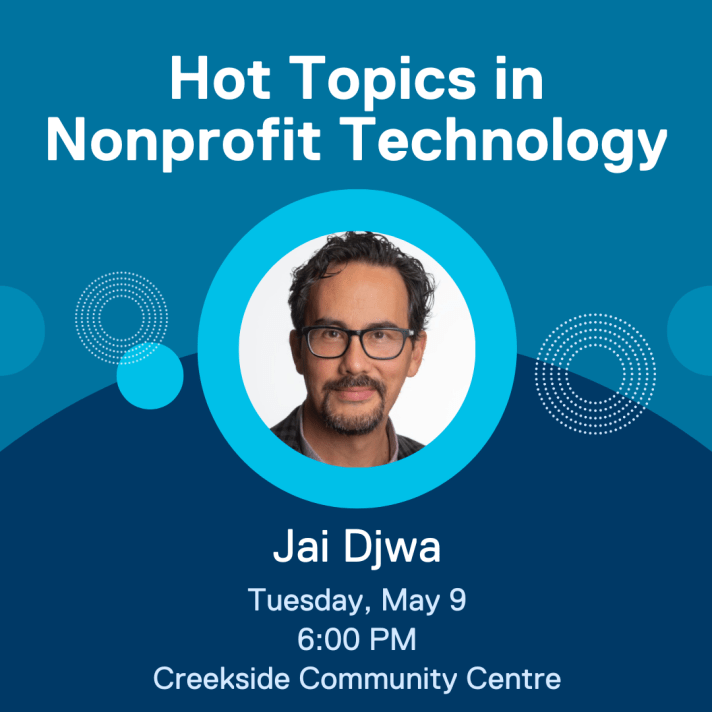
TechSoup Connect Vancouver is returning with our first in-person event since COVID-19. Whooo!
Join us for a return to in-person events with an evening of innovation and inspiration at Hot Topics in Nonprofit Technology: AI, VR, and Mastodon. This cutting-edge event with Digital Strategist Jai Djwa will explore the latest trends and advancements in nonprofit technology, including artificial intelligence, virtual reality, and the Mastodon platform.
🗓️ May 9, 2023. 6-7:30 pm.
🗺️ Creekside Community Centre, Multipurpose Room 1, 1 Athletes Way, Vancouver, V5Y 0B1
🎟️ https://events.techsoup.org/e/mghs6s/
1683680400
days
hours minutes seconds
until
Hot Topics in Nonprofit Technology: AI, VR, and Mastodon [IN-PERSON]
Get ready to dive into the exciting world of AI and discover how it can revolutionize the way nonprofits work. Learn about the latest applications of AI in nonprofit operations, fundraising, and donor engagement, and explore the potential of this technology to drive meaningful change in the sector.
Next, take a journey into the world of virtual reality and explore how it can be used to bring your nonprofit’s mission to life. Discover how VR can help you tell your story in a more engaging and immersive way, and learn about the latest VR tools and technologies that are transforming the nonprofit landscape.
Finally, discover the power of Mastodon, the decentralized social network that is changing the way nonprofits engage with their supporters. Learn how Mastodon can help you build a community of like-minded individuals who are passionate about your cause, and explore the latest Mastodon features and best practices.
Throughout the event, Digital Strategist Jai Djwa will share his expert insights and provide practical tips and strategies that you can implement in your nonprofit today. Don’t miss this incredible opportunity to learn, connect, and innovate with the best and brightest in the nonprofit technology space.
 Elijah van der Giessen