The platform, called Grantable, is based on the same technology as ChatGPT, and it markets itself to freelancers who charge by the application. That, she thought, clearly threatens opportunities in the industry.“For me, it’s common sense: Which do you think a small nonprofit will pick?” Ms. Brown said. “A full-time-salary-plus-benefits person, or someone equipped with A.I. that you don’t have to pay benefits for?”
Tinkering With ChatGPT, Workers Wonder: Will This Take My Job? – The New York Times
Author: Elijah van der Giessen
Host of Vancouver's #Tech4Good meetup TechSoup Connect Canada.
I’m delighted to share that TechSoup has just launched the Consultants Connection directory! Consultants Connection solves two problems:
- Nonprofits finally get access a network of verified, trusted consulting firms who have experience helping nonprofits with technology, fundraising, marketing and more.
- Consultants have a way of reaching potential clients and showing how they’re uniquely suited to serve the nonprofit sector.
Consultants, here are some reasons you should join:
- Grow your impact by reaching over 900,000 aligned nonprofits seeking verified, trusted providers
- Streamlined onboarding: Verify your organization and provide key data on your offerings in under 30 minutes
- Dedicated listing & Direct leads: Once you onboard you’ll get a dedicated listing and our automated system will send leads directly to you
- Free Introductory Pricing: Did I mention that it’s currently offered for free?
I’ve been the TechSoup Connect (originally called NetSquared) community manager for 10 years and 10 months. I’ve volunteered as the host of the Vancouver chapter for 13 years and 9 months. That’s a long time, so it’s time to stretch my wings and build new skills. Starting on March first, I transitioned into a new role at TechSoup. I am the Community Manager for a new division focused on app for good developers. Web3 distributed apps will be my first project, so I want to talk if you’re working with Filecoin, web3 technologies, or the decentralized web!
I’ve been blessed to stumble onto two callings in my career – jobs perfectly aligned with where I can bring the most value. First, the Edmonton Folk Music Festival introduced me to the power of volunteer-led community, and then the NetSquared/TechSoup Connect opportunity allowed me to help a community scale globally through the web. It has been a pleasure getting to know the 300+ volunteers who have worked so far to help nonprofits master technology.
Thank you for everything, and you inspire me daily with your commitment to growing a better nonprofit sector. Supporting your efforts has been a dream job,
Elijah van der Giessen
P.S. I’m still the co-host of TechSoup Connect Western Canada, so please join my chapter!
Hi! It’s Eli. I’m a Community Manager for TechSoup. I’m based in Vancouver, Canada. More about me.
This is mostly a link blog, where I keep ideas and articles worth re-reading.
1681254814
days
hours minutes seconds
until
Indigenous Protocols For Nonprofits
What is a territorial acknowledgement? How does it differ from a traditional welcome? If you are asking yourself these types of questions, we are here to help.
This online workshop from TechSoup Connect Western Canada will discuss the importance of understanding Indigenous protocols in Canada and how this relates to the non-profit industry.
This event is held with the support of the New School of Fundraising.
My response to a discussion on the NetSquared Local mailing list asking “Why did you become a NetSquared organizer?”
When I was in my 20s I had two groups of friends: nerds and activist hippies. There was no crossover between the groups and I kept these two communities and parts of me separate like matter and antimatter (that’s the nerd talking!)
When I moved to Vancouver in 2007 my workplace sent me to the Web of Change conference (they noticed that their volunteer manager kept asking why the database was broken) where I first encountered the progressive nonprofit tech community. IT BLEW MY MIND!
It may not seem strange you, being worldly and reading this in 2013, but for me the idea that nerds and activists could co-exist or even be the same person had never crossed my mind. These communities had always been oil and water in my mind. Activists are anti-technology: that’s what I had learned (growing up on a commune.) :-)
I discovered an entire new universe that week at Web of Change and it changed the course of my life irrevocably.
The friendly conference attendees scoffed at my naiveté and recommended that I start attending Vancouver’s Net Tuesday, which had recently been formed. I did. And I learned, while sitting quietly in the back.
But after a few months the organizer (Joe Solomon, who went on to 350.org and #GreenMemes) left town. The idea of the group folding was too tragic, so I volunteered to take it over. And four years later here I am!
But WHY did I decide to take on Net Tuesday Vancouver?
I wanted to find my tribe
I was in a new city and I didn’t know anybody. I discovered that being a NetSquared organizer turned me into a community hub – I quickly met all the key players in the sector, many of whom have become friends. It can be hard to find local nptech-ies without a Net2 group!
I’m shy(ish)
I can get really quiet in a group of people, unless I have a clearly defined role. Being the “host” of a meetup gives me an “in” to talk with people.
I like organizing events
I spent my 20s doing production on large outdoor festivals. I didn’t want my event skills to atrophy.
I wanted to learn more
I had learned at lot at the local meetup. The best way to learn more was to schedule more events! And this time I could guarantee that I’d be interested in the topic, because I was planning it. “Scratch your own itch” they always say. :-)
I wanted to build a reputation
As I developed my career in nonprofit tech I quickly realized that being a Net2 organizer was doing wonders for my reputation. People (irrationally!) assumed that I was an expert on every topic I had a speaker present on! I started to receive job offers…
Net Tuesday fit with my values
Somewhere along the way life taught me that the more I gave the more I received. I enjoy serving others, and being a NetSquared organizer has been the most rewarding volunteer gig I’d ever taken on.
And that, in a giant nutshell, is why I become a Net2 organizer. :-)
I’m gonna host a #commbuild chat on May 7. You should join us!
TOPIC: Growing your community: hacks for finding your tribe
DATE: Tuesday, May 7, 2013
TIME: 1–2 PM ET/ 10–11 AM PT
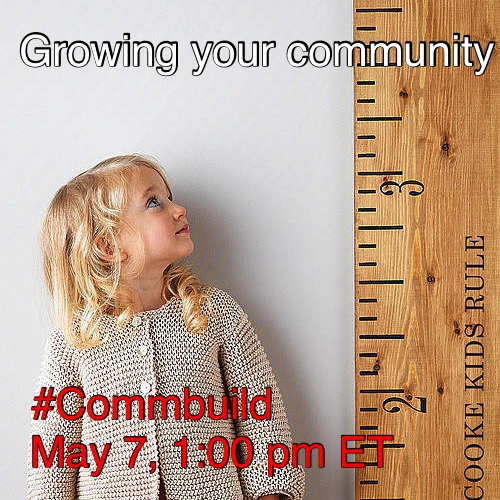
Starting a community can be daunting, and growing it can be even harder. How do you grow your group so that it isn’t just you talking to an empty room? Because THAT is demoralizing! :-p
There are tricks and hacks (AKA “best practices”) that you can use to accelerate your community growth. Join the #CommBuild-ers to learn from grizzled experts and share your secrets to community growth and success.
Join the tweet chat and follow the hashtag #commbuild.
YOUR FACILITATOR
Elijah van der Giessen must be 100 years old, because he started doing Community Building back when “online social networks” consisted of email. Eli is the NetSquared Local Community Curator supporting a global volunteer network of 50 groups that each year hold over 450 events for the nonprofit technology sector. He’s also been the volunteer coordinator for outdoor festivals, environmental NGOs and Canadian Idol.
ABOUT #COMMBUILD
These conversations are focused on issues and topics relevant to those working on community building or in community management roles. They are open to anyone interested in learning and sharing about building community, on and offline, with the use of social media or other technology tools.
On March 12 I had the pleasure of joining Kristina Lemieux and Trevor Loke to talk about all things citizen engagement. FUN!
Check out Sankaset for more.
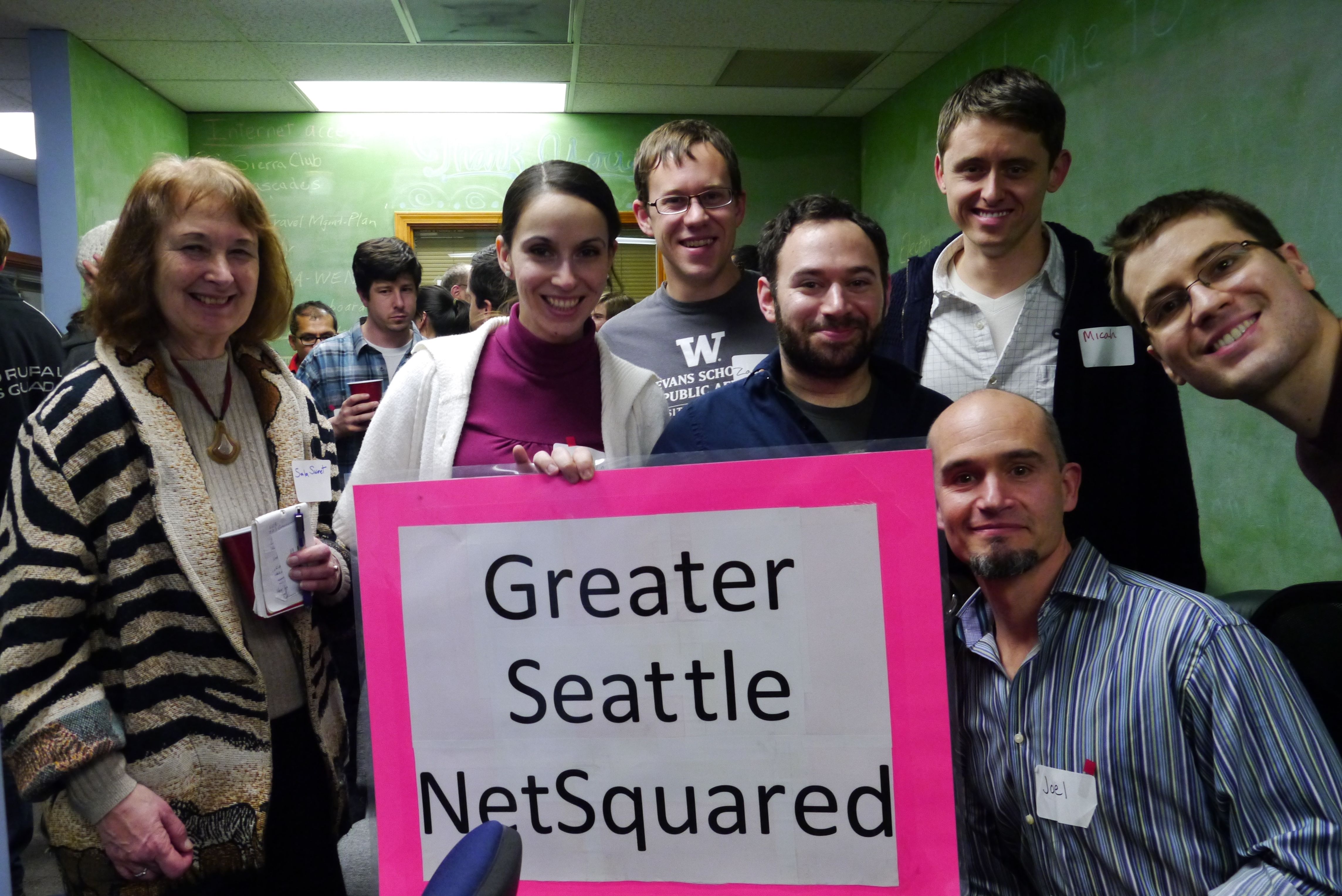
I’ve been the organizer of Vancouver’s Net Tuesday for over three years, but last week (for the first time ever!) I had the chance to visit another city’s NetSquared event. It was awesome! I’ve been privileged to host two other NetSquared organizers in Vancouver (Tierney and Mel) but this was the first time I got to experience another city’s NetSquared magic in person.
The newly re-energized Seattle organizing team put together a kick-ass review of their big digital wins of 2012.
Ephemera
- Check our the #Net2Seattle hashtag for event tweets
- I took some photos from the event
- Seattle Works blogged the event
- Follow them on twitter: @Net2Seattle
A HUGE thanks to the Seattle team for being so welcoming. Chris, Cornelia, Elena, Joel, Maureen, Michael and Sean – you can created a powerful, sustainable group.
It was totally worth the three hour drive from Vancouver, BC to Seattle to attend the relaunch of #Net2Seattle. Check out those handsome kids!
NetSquared’s local organizers hold over 450 nonprofit technology events annually. The best way to participate is to attend in person but our organizers also create event reports so that they can share the lessons learned with a global audience. You can find many of those event summaries here on the NetSquared blog, but some organizers just don’t like blogging! I’m one of them. For those more visually-oriented organizers the NetSquared community and I have been experimenting with some non-blog ways to document NetSquared local events.
Here are a few tools and techniques that will help you easily create event reports:
Storify
NetSquared events create a huge amount of digital ephemera: tweets, slides, videos, links mentioned, photos… Storify.com offers an online tool that helps you collect your event’s online clutter and shape it into a coherent story using a drag and drop interface. Here’s an example from Vancouver’s January event with Cambridge organizer Mel Findlater.
Google+ Hangouts
Several NetSquared groups have been streaming their events using Google+ Hangouts and then automatically uploading the event to youtube. Amanda in Burlington has been doing this regularly as has Judy Hallman in North Carolina. For an example of a more complex, multi-city event streamed via Google+ Hangouts check out the four city NetSquared Downunder camp organized by our team in Australia and New Zealand.
Live screencast recordings
The newest and laziest form of event reporting I’ve recently discovered is to create a screencast from your event. This is a perfect solution for demos and other presentations that feature slides or a lot of on-screen activity. You use screencasting software (here’s 12 options from free to expensive – I used Screenflow) to record a video of all on-screen activity and record audio using the computer’s built-in microphone. Now you have a file with presentation audio and video that you can upload to youtube or video. It’s SUPER easy as long as you set-up your presenter’s computer ahead of time! Check out this example from Vancouver’s data visualization event.
Visualizing data using maps and other tools – NetTuesday Vancouver from Mack Hardy on Vimeo.
How do you document your events? Please share your favorite tricks and tools in the comments.
 Elijah van der Giessen